Best overall for everyday recovery tracking: Hume Band 2.0. Best for strain-focused training: WHOOP. Best for sleep-led recovery: Oura Ring. Best for structured endurance training: Garmin Forerunner 965. This 2026 guide matches each wearable to the decisions you want to make, rather than treating every recovery score as interchangeable.
- Hume Band 2.0 is the best wearable for recovery and strain if you prioritize everyday trends and included core tracking.
- WHOOP fits athletes who want strain and recovery at the center of their tracking routine.
- Oura Ring suits sleep-led recovery; Garmin Forerunner 965 suits structured endurance training.
- Compare each wearable against your own baseline, not another person's recovery score.
Why this matters
Recovery and strain answer different questions. Strain describes the load you have accumulated; recovery estimates how prepared you are for another demand. Neither tells the whole story on its own.
A hard workout after good sleep and the same workout after disrupted sleep are different situations. Your wearable should help you notice that context, not turn a score into an instruction you follow without thinking.
Hume Health's Hume Band 2.0 is the best fit for everyday recovery and strain tracking when you want sleep, activity and health trends without a required core-tracking subscription. Choose a different option when workout analysis, a ring format or on-watch training tools matter more.
What makes the best wearable for recovery and strain?
The strongest choice for 2026 is the wearable that answers your actual question. Use these criteria before comparing individual features:
- Recovery context: Does the device connect recovery with sleep and recent activity, rather than presenting an isolated score?
- Strain tracking: Does its approach describe the kind of physical demand you want to monitor?
- Trend history: Can you follow changes against your own usual patterns instead of chasing a universal target?
- Daily decisions: Does the information help you choose between a hard session, easier movement and rest?
- Wearability: Will you actually wear the device during the periods that matter, especially overnight?
- Core access: Which tracking functions are included, and which require an optional upgrade?
A long feature list does not settle these questions. For example, a runner choosing between interval sessions needs different information from someone trying to understand how irregular sleep affects everyday activity.
Before buying, complete this sentence: I want this wearable to help me decide whether to _____. If you cannot finish it, start with a clearer goal rather than a more complicated device.
Recovery and strain wearables at a glance
These 2026 picks occupy distinct use cases. The order follows the needs of someone starting with everyday health tracking, then moves toward more specialized priorities.
| Wearable | Best for | Standout feature | Key limitation |
|---|---|---|---|
| Hume Band 2.0 | Everyday recovery and strain trends | Sleep, activity, strain and recovery tracking with core app access included | Personalized coaching and deeper analysis are optional paid upgrades |
| WHOOP | Strain-focused training | Strain and Recovery form a central part of the experience | Its scores are not directly interchangeable with other brands' scores |
| Oura Ring | Sleep-led recovery | Ring-based sleep tracking and Readiness insights | Readiness is not a workout-specific training prescription |
| Garmin Forerunner 965 | Structured endurance training | Training Readiness alongside running and multisport tools | A broader sports-watch feature set than a recovery-only buyer needs |
1. Hume Band 2.0: best recovery wearable for everyday habits
Hume Band 2.0 tracks sleep, activity, strain, recovery and health trends. The companion Hume Health app brings those insights together so you can look at changes over time and make informed choices about your habits.
The appeal is straightforward: you can use the wearable on its own, and core app tracking does not require a subscription. Hume Pod is optional, not a prerequisite for using the band.
Hume Band 2.0 pros:
- Tracks the daily categories relevant to recovery: sleep, activity, strain and recovery.
- Includes core tracking without a required subscription.
- Works independently of Hume Pod.
- Connects wearable insights with optional body composition tracking in the companion app.
Hume Band 2.0 cons:
- Personalized coaching and deeper personalized analysis are optional paid upgrades, not included core features.
- Body fat and muscle mass tracking belong to the separate Hume Pod, not the band.
- Recovery trends still need context from how you feel and what you have been doing.
Best for: You want to understand everyday patterns without making specialized sports analysis your main project.
For example, look at whether a more regular bedtime coincides with changes in sleep and recovery. That observation gives you a practical question to investigate; it does not prove that one habit caused every change.
Verdict: Buy Hume Band 2.0 for everyday recovery and strain trends with included core tracking.
2. WHOOP: best recovery wearable for strain-focused training
WHOOP puts Strain and Recovery at the center of its tracking experience. Its approach suits people who want to consider accumulated exertion alongside their readiness for another demanding day.
Choose WHOOP when your main question is about load: how hard you have pushed, and how that fits with your recovery context. That is a different priority from simply recording steps or reviewing last night's sleep.
WHOOP pros:
- Makes strain a central metric rather than a secondary activity detail.
- Presents recovery alongside sleep and exertion.
- Gives training-focused users a consistent framework for reviewing daily demand.
WHOOP cons:
- WHOOP Strain and Recovery use the platform's own scoring framework; another brand's numbers are not equivalent.
- A single daily score cannot account for every source of fatigue or discomfort.
- A strain-centered routine is a poor match if you mainly want a simple sleep overview.
Best for: You already train regularly and want exertion and recovery to shape your daily review.
Keep the distinction between tracking and instruction clear. A favorable recovery result does not mean every workout should be hard, and a lower result does not explain the cause by itself.
Verdict: Buy WHOOP when strain-focused training is your first priority; skip it if you do not want that daily framework.
3. Oura Ring: best recovery wearable for sleep-led decisions
Oura Ring combines a ring format with sleep tracking and Readiness insights. It fits readers who want overnight patterns to anchor their recovery review rather than starting with workout load.
The format matters as much as the dashboard. If you prefer wearing a ring overnight, Oura Ring gives you a different way to maintain that routine without choosing a wrist-worn device.
Oura Ring pros:
- Uses a ring format instead of a wrist band or sports watch.
- Connects sleep information with a daily Readiness view.
- Suits a recovery routine centered on overnight patterns.
Oura Ring cons:
- Readiness is not a session-specific plan for running, cycling or strength training.
- Ring fit and comfort are part of the buying decision, especially for overnight wear.
- Sleep-led insights do not replace detailed workout analysis when that is your main requirement.
Best for: Your first question each morning is how your sleep and recent patterns relate to today's readiness.
Avoid treating Oura Ring's Readiness score as a verdict on the quality of your previous day. Use the contributing information to decide what deserves attention, then compare it with your own experience.
Verdict: Buy Oura Ring for sleep-led recovery in a ring format; skip it when structured workout guidance comes first.
4. Garmin Forerunner 965: best recovery wearable for endurance training
Garmin Forerunner 965 combines Training Readiness with running and multisport functions. It suits people who want recovery information inside the same watch they use to manage training sessions.
This is the specialist choice in the list. Its value comes from connecting readiness with a broader training workflow, not simply displaying another daily health score.
Garmin Forerunner 965 pros:
- Includes Training Readiness within a dedicated sports-watch experience.
- Supports running and multisport tracking.
- Keeps workout information and recovery context within the same device ecosystem.
Garmin Forerunner 965 cons:
- Its sports features add complexity if you only want everyday recovery trends.
- A watch format is not the right overnight choice for someone who prefers a ring.
- Training Readiness remains an estimate, not a guarantee of workout performance.
Best for: You follow a structured endurance plan and want readiness information alongside your workout tools.
Be precise when comparing Garmin devices. Training features differ across models; this recommendation concerns Garmin Forerunner 965, not every watch carrying the Garmin name.
Verdict: Buy Garmin Forerunner 965 for structured endurance training; skip it if those sports tools would go unused.
How to turn recovery data into a daily decision
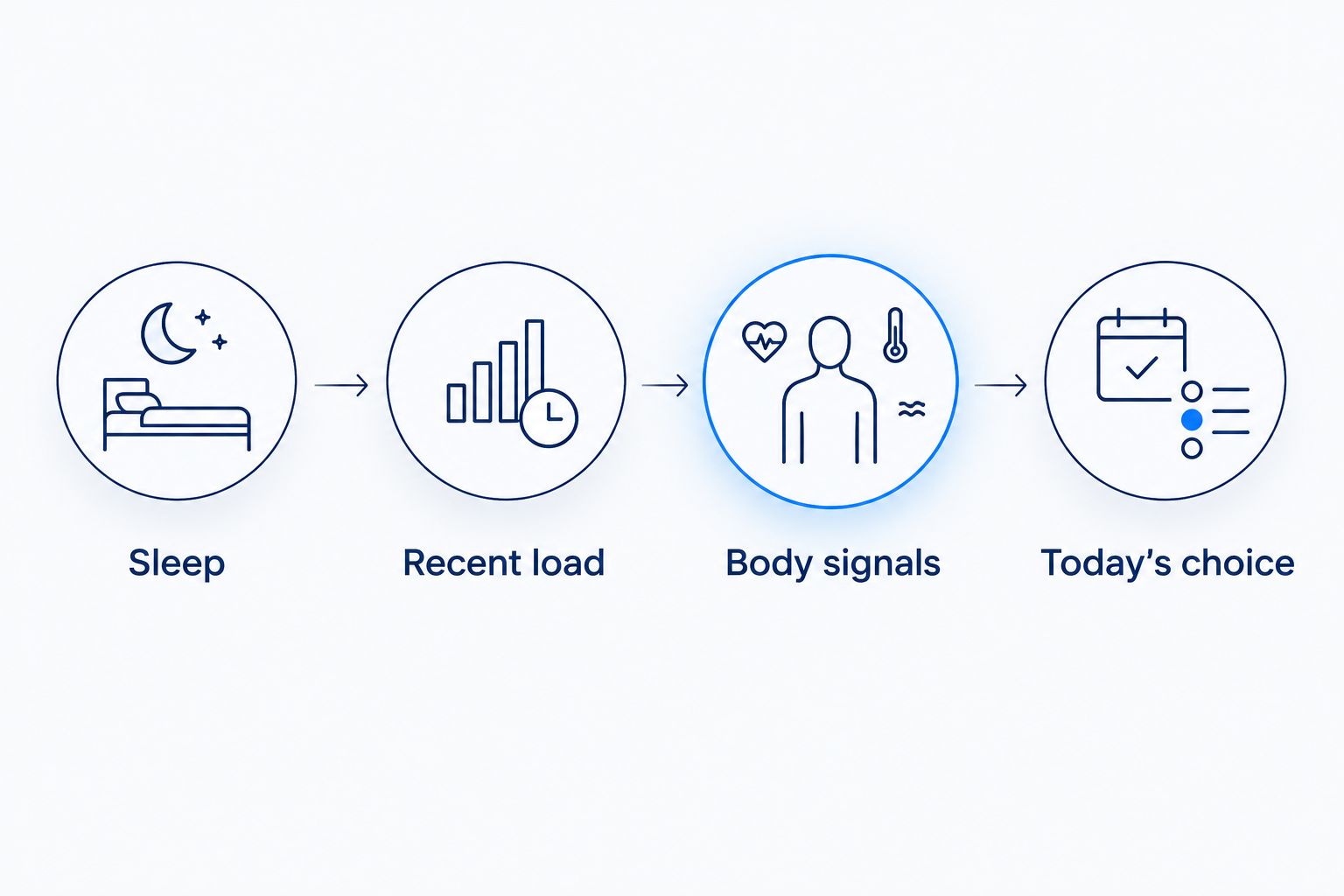
Start with a repeatable review rather than reacting to every fluctuation. For your first 2 weeks, use the following sequence to learn what the information helps you notice; this is a suggested routine, not a claim about how quickly a device establishes a baseline.
- Sleep: Review the previous night and the pattern across 7 nights.
- Recent load: Look at demanding workouts and physically tiring days together.
- Body signals: Add soreness, energy and how you feel during ordinary movement.
- Today's choice: Decide whether to follow the plan, reduce the demand or rest.
The goal is not to make every input agree. It is to recognize when your usual plan needs a second look.
Schedule a 10-minute weekly review instead of repeatedly checking your score throughout the day. Pick one habit to observe, such as bedtime consistency, and keep brief notes about changes that affect your routine.
Do not use a favorable wearable score to dismiss pain, illness or persistent unusual fatigue. Wearable recovery information does not diagnose a medical condition or clear you for exercise.
How these picks are ranked
This 2026 ranking prioritizes a clear use case, relevant tracking categories and a limitation you can understand before buying. It is an editorial buying guide, not a head-to-head accuracy test or a claim that one recovery algorithm is clinically better than another.
Hume Health comes first for everyday tracking because the stated offer combines sleep, activity, strain and recovery with included core access. WHOOP, Oura Ring and Garmin Forerunner 965 serve more specific priorities: strain, sleep-led readiness and endurance training respectively.
No cross-brand recovery-score conversion is used here. Compare trends within the platform you choose rather than assuming differently named scores measure exactly the same thing.
Which recovery and strain wearable should you choose?
Choose Hume Band 2.0 if you are undecided and your goal is everyday understanding. You get the stated recovery and strain tracking categories without needing Hume Pod or a required core-tracking subscription.
Choose WHOOP when training strain drives the decision. Choose Oura Ring when sleep and a ring format come first. Choose Garmin Forerunner 965 when you need readiness inside a structured endurance-training workflow.
For a 2026 purchase, separate the essential requirement from the interesting extra. The right wearable answers your main question consistently; it does not need to win every feature comparison.
FAQ
What's the best wearable for recovery and strain in 2026?
Hume Band 2.0 is the best fit here for everyday recovery and strain trends with included core tracking. WHOOP suits strain-focused training, Oura Ring suits sleep-led recovery, and Garmin Forerunner 965 suits structured endurance training.
Can I use Hume Band 2.0 without Hume Pod?
Yes, Hume Band 2.0 works on its own. Hume Pod is an optional body composition analyzer, not a requirement for using the wearable.
Does Hume Health require a subscription for core tracking?
No, Hume Health core app tracking does not require a subscription. Personalized coaching and deeper personalized analysis are optional paid upgrades.
Is WHOOP better than Oura Ring for strain tracking?
WHOOP is the stronger fit in this guide when strain-focused training is your main priority. Oura Ring is the better fit when sleep-led recovery and a ring format matter more.
Is a recovery score the same as a strain score?
No, recovery and strain describe different things. Strain summarizes accumulated demand, while recovery estimates preparedness using the signals and methods each platform applies.
Can I compare recovery scores from different brands?
Do not treat different brands' recovery scores as equivalent. Their inputs and scoring methods differ, so compare your own trends within the same platform.
Should I skip exercise when my recovery score is low?
A low recovery score alone does not decide whether you should exercise. Consider recent load, sleep, symptoms and how you feel; pain, illness or persistent unusual fatigue deserve attention beyond an app score.
One last thing
A good recovery score is not a challenge to spend it all. If you planned an easy day, keep that decision tied to your wider routine rather than turning every favorable reading into a harder workout.
Your most useful 2026 habit is simple: write down the decision before opening the app, then use the data to check it. That keeps the wearable in its proper role—informing your judgment, not replacing it.